
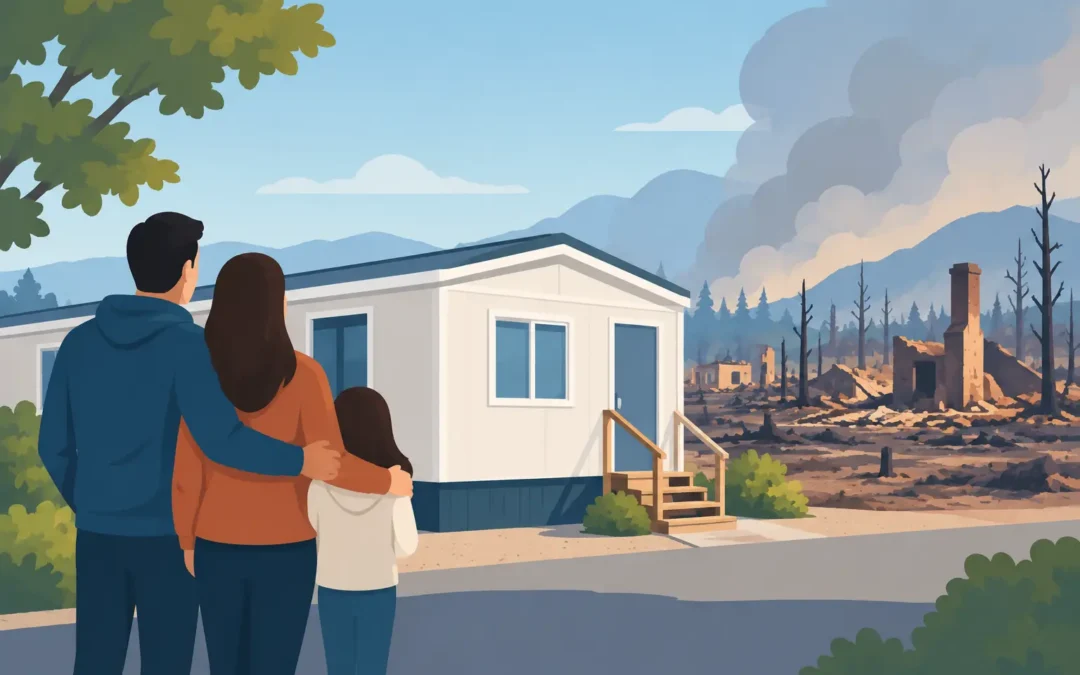
A wildfire does not have to burn a home to make it unlivable. Smoke contamination, fire department access restrictions, a damaged well, downed power lines, or a mandatory evacuation can force a family out for weeks or months. Temporary housing coverage is the part of a homeowners policy that may help pay the added cost of living elsewhere while the home is being repaired or rebuilt.
For homeowners in the Sierra foothills, mountain communities, and other high-risk parts of Central and Northern California, this coverage deserves more attention than it usually gets. After a major fire, lodging is scarce, rental prices rise quickly, and rebuilding timelines can stretch far beyond what most families expect. A policy can appear adequate on the declarations page while leaving too little room for the real cost of displacement.
What temporary housing coverage actually pays for
Temporary housing coverage is commonly called loss of use or Additional Living Expense (ALE) coverage. Its purpose is not to replace every dollar you spend after a loss. It is designed to pay the reasonable increase in your normal living expenses when a covered claim makes your home uninhabitable.
That distinction matters. If your normal mortgage payment is $2,400 and you need to rent a comparable home for $3,600, the policy may address the extra housing cost, subject to the policy terms and limit. If you normally spend $700 per month on groceries but spend $900 because you are relying on takeout while displaced, the additional amount may be considered. Your regular household expenses generally remain your responsibility.
Depending on the policy, temporary housing coverage may help with increased costs for a rental home, hotel stays, utilities at the temporary residence, reasonable pet boarding, storage, added transportation, and meals above your ordinary food budget. It can also apply when civil authorities prevent access to the home after a covered event, even when the structure itself has not been damaged. The exact trigger, time period, and eligible expenses depend on the wording of your policy.
Why wildfire displacement is different
A kitchen fire can sometimes be repaired in a few months. A widespread wildfire is a different kind of claim. Thousands of households may be looking for rentals at the same time. Contractors, building materials, architects, engineers, and county permitting departments can all be under unusual pressure.
In rural and foothill communities, the closest suitable rental may be many miles away. A family may need to relocate near a child’s school, a medical provider, livestock, or a work commute. Those realities can make a temporary living arrangement far more expensive than homeowners anticipated.
There is also a practical issue of comparability. Insurers generally expect the replacement living arrangement to be reasonable, not identical to a custom home or large rural property. Still, “reasonable” should account for household size, pets, accessibility needs, proximity to work or school, and whether the home is a primary residence. Keep those needs documented early, especially if the available housing choices are limited.
Coverage limits can run out before rebuilding ends
Many homeowners policies provide loss of use as a percentage of the dwelling limit. For example, a policy might provide 20% or 30% of Coverage A for additional living expenses. A higher dwelling limit may produce a larger ALE amount, but that does not automatically mean the amount will be enough for a long wildfire rebuild.
Other policies provide a stated dollar amount, a set number of months, or coverage for the shortest time reasonably required to repair or replace the property. These approaches are not interchangeable. A policy with a generous-looking dollar limit can still create a problem if it has a short time limit. A policy with a longer time period can still fall short if the dollar limit is low relative to local rental costs.
Ask a direct question when reviewing quotes: Is temporary housing coverage limited by a percentage, a dollar amount, a time period, or more than one of these? Then consider a realistic scenario, not a best-case one. What would a suitable rental cost for your household for 12, 18, or 24 months? What happens if debris removal, permits, or contractor availability delay the rebuild?
The California FAIR Plan question
For homeowners who have had a non-renewal or cannot find a standard admitted carrier, the California FAIR Plan can be an essential source of fire protection. But it is not designed to function as a complete homeowners policy by itself.
The FAIR Plan is generally paired with a separate Difference in Conditions policy, often called a DIC policy, to address coverages that may not be included in the FAIR Plan policy. Temporary housing coverage is one of the areas that must be reviewed carefully. Never assume that because you have fire coverage, you automatically have enough loss of use coverage for a wildfire displacement.
The right structure depends on the property, the carrier options available, the dwelling limit, and the terms of the companion policy. A lower premium can be appealing, particularly after a sharp rate increase, but reduced loss of use protection can become a serious financial burden if the home cannot be occupied for an extended period.
How to review your policy before fire season
Start with the declarations page, but do not stop there. Look for Coverage D, Loss of Use, or Additional Living Expense. Confirm the limit shown and ask whether it is separate from, or shared with, any other coverage. The policy form and endorsements may contain restrictions that do not appear clearly on the first page.
Next, estimate what displacement would cost your household. Check rental listings in locations where you could realistically live. Include utilities, pet fees, storage, and the possibility that family members could need a larger rental than a basic apartment. If you have a second home or use the property seasonally, ask how the policy handles loss of use for that occupancy type. Coverage for a primary residence and a vacation property may work differently.
Then review the claims process. Insurers will usually ask for receipts and proof of your normal expenses. Set up a dedicated folder now for policy documents, household bills, lease agreements, and major receipts. After a loss, save every expense record and maintain a simple log of what was paid, why it was necessary, and how it relates to the displacement.
Finally, consider whether the dwelling limit itself reflects current rebuilding costs. Loss of use is often tied to that figure. Underinsuring the home can affect more than the structure – it can also reduce the financial cushion available while you are forced to live elsewhere.
Questions worth asking before you bind coverage
When comparing homeowners quotes, do not focus only on the annual premium and wildfire deductible. Ask how much temporary housing coverage is included, how long it lasts, and whether higher limits are available. Ask whether mandatory evacuation alone can trigger coverage, and whether a civil authority restriction has a waiting period.
It is also wise to ask how the insurer handles extended rebuilds after a declared disaster. No broker or carrier can promise that every claim will move on the same timeline, but clear answers about policy terms are better than assumptions made under pressure.
For high-risk California homes, the best policy is not simply the one that gets through underwriting. It is the one that gives you a workable plan if wildfire, smoke, or evacuation makes your home unavailable. Foothill Fire Insurance can help homeowners compare available options, coverage limits, and deductibles through a complimentary estimate so the decision is based on protection as well as price.
A temporary place to live should not become a second financial crisis after a fire. Before the next evacuation notice or red-flag warning, take a close look at the coverage that would carry your household through the time between leaving home and returning to it.