
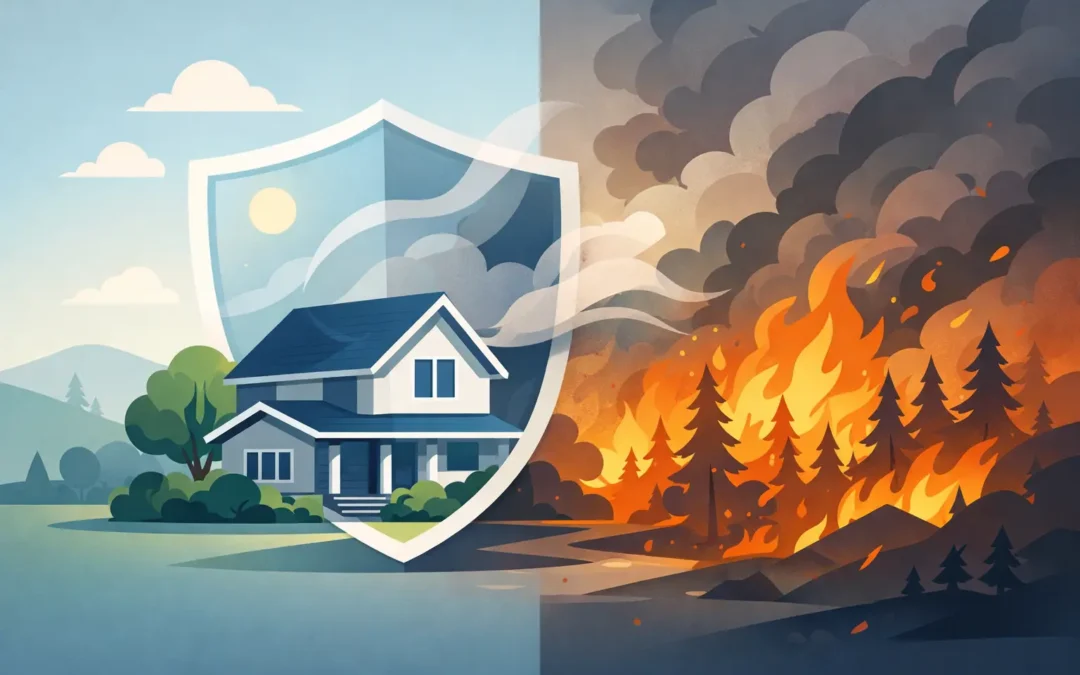
When wildfire season turns the sky orange, the damage is not always dramatic or obvious. Sometimes the biggest problem is what drifts in through vents, attic gaps, and door seals. If you are asking, does home insurance cover wildfire smoke, the short answer is often yes – but only in certain situations, and the details matter more than most homeowners realize.
For homeowners in Central and Northern California, smoke damage can become a real claim issue even when the house never catches fire. Ash can settle into insulation, soot can stain walls and ceilings, and smoke odor can cling to flooring, furniture, and HVAC systems. Whether your policy pays for that cleanup depends on how the policy is written, what caused the damage, and whether there are coverage gaps hiding in the fine print.
Does home insurance cover wildfire smoke damage?
In many standard homeowners policies, wildfire smoke is covered when it results from a sudden and accidental covered peril, such as fire. If a nearby wildfire sends smoke into your home and causes physical damage, there is a good chance the dwelling coverage and personal property coverage may respond.
That said, insurance companies do not treat every smoke-related problem the same way. A clear case might involve visible soot damage inside the home after a wildfire event. A less clear case might involve lingering odor, air quality concerns, or long-term contamination that is harder to document. Insurers are more likely to pay for direct physical damage than for general discomfort or preventive cleaning.
This is where many California homeowners get caught off guard. They assume that if smoke entered the home, everything tied to that event will be covered automatically. In practice, claims can turn on wording, documentation, and how the adjuster interprets the damage.
What wildfire smoke damage is usually covered
If your policy includes coverage for fire, smoke damage tied to a wildfire may extend to several parts of the claim. The structure of the home is often the first concern. Soot on interior walls, smoke contamination in insulation, damage to cabinets, flooring, curtains, and built-in systems may all fall under dwelling coverage if the insurer agrees the smoke caused physical loss.
Personal belongings may also be covered. Clothing, upholstered furniture, rugs, electronics, and other contents can absorb smoke odor or show visible staining. In stronger claims, the issue is not just odor but actual contamination that requires professional restoration, cleaning, or replacement.
Additional living expenses may also come into play. If the smoke damage makes the home temporarily uninhabitable, some policies may help pay for hotel costs, meals above your normal living expenses, and other temporary housing needs. This can matter during major wildfire events in foothill and mountain communities where smoke conditions linger for days or weeks.
Still, coverage is rarely unlimited. Your claim is subject to policy limits, deductible, and the insurer’s view of what can be cleaned versus what must be replaced.
What may not be covered
Smoke-related claims become more difficult when the damage is gradual, preventive, or hard to prove. For example, if your home has repeated seasonal smoke exposure over several years, an insurer may argue that the issue is wear, maintenance, or ongoing environmental exposure rather than one covered event.
Odor alone can also be a gray area. Some carriers will pay for professional deodorization when it is tied to a covered fire loss. Others may push back if there is no visible residue or measurable physical damage. The same goes for air duct cleaning, insulation removal, and HVAC treatment. These costs may be covered if contamination is confirmed, but they are not guaranteed in every policy.
Outdoor cleanup is another point of confusion. Ash and soot on patios, fences, decks, or landscaping may not receive the same treatment as damage inside the dwelling. If you have detached structures coverage, some exterior items might be included, but landscaping and plant loss often have lower limits and narrower rules.
The biggest problem is assuming your policy is broader than it really is. In higher-risk California areas, some homeowners are no longer carrying a traditional comprehensive policy with one insurer. They may have a California FAIR Plan policy for fire and a separate companion policy for liability, theft, water damage, and other perils. In that setup, smoke coverage needs to be reviewed carefully because not every part of the protection sits in one place.
How the California FAIR Plan affects smoke claims
For many homeowners in wildfire-prone parts of the state, the FAIR Plan has become the fallback option when standard carriers pull back or issue non-renewals. It can be an important safety net, but it is not the same as a full-featured homeowners policy.
The FAIR Plan generally covers fire, which means wildfire smoke damage connected to a covered fire event may be included. But the scope of coverage, claims handling expectations, and what is considered direct physical loss can feel narrower than what some homeowners expect from prior policies.
Just as important, the FAIR Plan is often paired with a separate difference-in-conditions policy or companion policy to fill in missing protections. If that second policy is weak or missing, homeowners may discover they are protected against one part of a wildfire-related loss and exposed on another. This is one reason working with a broker who understands fire-zone coverage matters. The goal is not just to get a policy issued. The goal is to avoid a false sense of security.
What insurers look for in a smoke damage claim
Insurance companies want evidence that the damage is real, tied to a covered event, and significant enough to justify payment. If you file a claim after a wildfire smoke event, documentation can make a major difference.
Photos of soot residue, ash infiltration, stained surfaces, and affected belongings are helpful. So is a clear timeline showing when the nearby wildfire occurred and when you noticed the damage. Professional inspection reports from restoration companies can also support the claim, especially when they identify contamination in insulation, ductwork, or porous materials.
Keep receipts if you pay for emergency cleaning or temporary lodging. Save notices from local officials about evacuation orders or hazardous smoke conditions. The more specific your evidence, the harder it is for an insurer to reduce the claim to a vague odor complaint.
At the same time, homeowners should be careful not to start major cleanup before documenting the condition. Basic steps to protect the property are reasonable, but wiping away evidence before the adjuster sees it can complicate the process.
How to read your policy before smoke becomes a claim
The best time to ask whether home insurance covers wildfire smoke is before the next fire starts. Look at the declarations page first, but do not stop there. The declarations page shows limits and deductible, not the full rules.
Review the section that explains covered perils, exclusions, and loss settlement. Check whether your policy is an HO-3, a FAIR Plan fire policy, or a layered setup with multiple carriers. If you have endorsements related to wildfire, pollution, mold, or ordinance and law, those may affect how a smoke claim is handled.
This is also where replacement cost versus actual cash value matters. If smoke-damaged contents are covered, replacement cost coverage can mean a very different financial outcome than depreciated reimbursement.
For homeowners in the foothills and mountain communities, this review is worth doing regularly. Carriers change forms, deductibles rise, and companion policies are not always renewed with the same terms. What you had two years ago may not be what you have now.
When to ask for a policy review
If your insurer has non-renewed you, moved you to a less familiar carrier, or placed you on a FAIR Plan plus companion policy structure, it is time for a close review. The same is true if you bought a home recently and simply accepted the coverage required for closing without fully comparing options.
A good review should answer practical questions, not just quote a premium. Does the policy cover smoke-related cleanup inside the home? Are detached structures treated adequately? Is there enough loss-of-use coverage if a wildfire event makes the home unlivable? Are your contents insured at realistic values?
For many homeowners, the issue is not whether they have insurance. It is whether they have the right insurance for the kind of wildfire loss most likely to happen in their area.
Foothill Fire Insurance works with homeowners facing exactly these questions in high-risk California ZIP codes, especially when standard coverage has become harder to find.
Wildfire smoke damage sits in that frustrating space between obvious disaster and hidden loss. If your home is in fire country, do not wait for the next smoky week to find out what your policy really says. A careful review now can spare you from a much more expensive surprise later.