
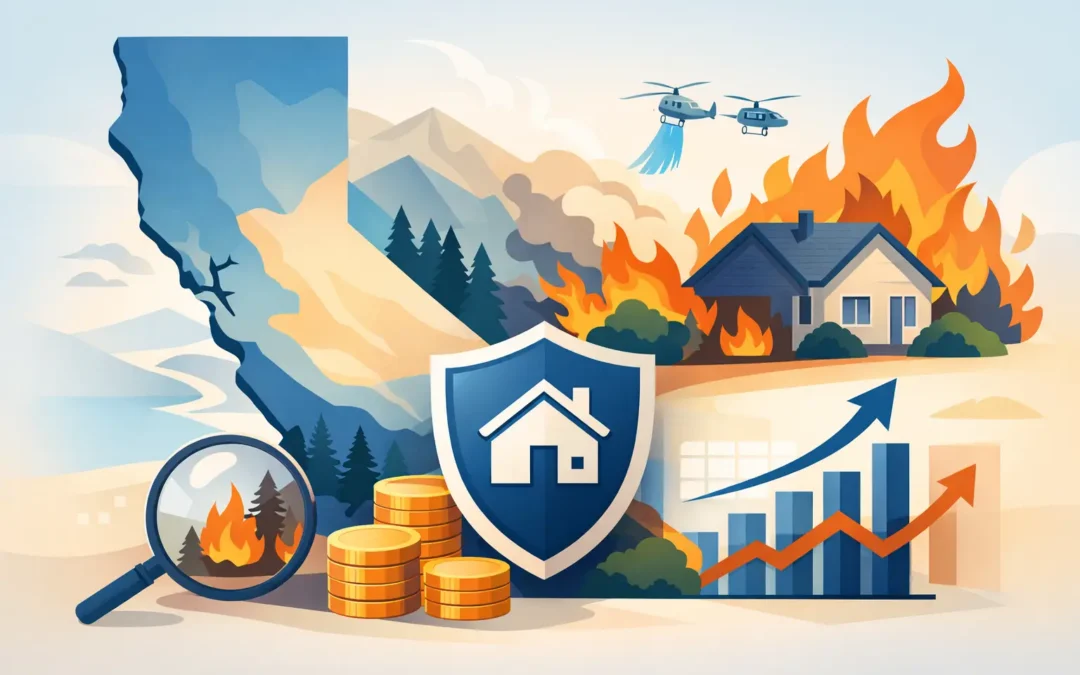
A lot can change between one renewal notice and the next. For many homeowners in the foothills, mountains, and rural parts of Northern and Central California, california wildfire insurance market trends are no longer an abstract industry story. They show up as higher premiums, stricter inspections, reduced coverage options, and in some cases, non-renewal letters that arrive with very little room for error.
That shift has been building for years, but the market now feels different in a more permanent way. Carriers are still writing business in California, yet they are doing it more selectively. Homeowners who once expected to shop among several standard insurers are now finding fewer admitted options, more scrutiny around property condition and vegetation, and wider pricing gaps between one quote and another. If you own a home in a wildfire-prone area, understanding what is changing can help you make better decisions before your next renewal or home purchase.
What is driving california wildfire insurance market trends?
The biggest force is simple: wildfire losses changed how insurers view long-term risk in California. Catastrophic fire seasons produced not just large claim totals, but also uncertainty around future losses. Insurers care about frequency, severity, and predictability. Wildfire has become harder to model with confidence because drought, wind events, fuel conditions, rebuilding costs, and utility-related exposures can all move quickly.
At the same time, insurance companies have also been dealing with inflation in construction materials and labor. Even when a fire does not happen, the cost to rebuild a home after any major loss is much higher than it was a few years ago. That means insurers are balancing two problems at once: elevated catastrophe exposure and more expensive claims.
California regulation is another piece of the picture. Rate approval rules, market conduct requirements, and recent efforts to stabilize availability all shape how carriers operate in the state. Some insurers have slowed new business, some have reduced concentration in certain ZIP codes, and others have shifted toward tighter underwriting standards instead of broad withdrawals. For homeowners, the result is the same – fewer easy options and a much more segmented market.
Availability is tighter, but not gone
One of the most common misconceptions is that no one writes homes in wildfire areas anymore. That is not accurate. Coverage is still available, but the path to getting it is less straightforward.
In many high-risk areas, standard admitted carriers may offer fewer policies than they did in the past, especially for older homes, homes with heavy tree density, steep access roads, or prior claims. Some homeowners are being pushed toward the California FAIR Plan when they cannot find a traditional policy. Others are combining FAIR Plan coverage with a separate policy for liability, theft, water damage, and other protections the FAIR Plan does not fully handle.
This matters because availability now depends heavily on the individual property, not just the town or county. Two homes on the same road may receive very different outcomes based on defensible space, roof age, updated vents, access for fire services, and overall maintenance. The market is more selective, but it is also more granular.
Premiums are rising, and the spread between quotes is wider
Higher premiums are the trend most homeowners feel first. In wildfire-prone parts of California, rate increases have been driven by both insurer loss history and the growing cost of reconstruction. But what surprises many people is how inconsistent pricing can be.
A homeowner may receive one quote that feels difficult but manageable, and another that is dramatically higher for roughly the same dwelling amount. That usually comes down to underwriting appetite. Some carriers still want certain wildfire-exposed risks if the home checks enough boxes. Others will price the same risk aggressively because they are limiting growth in that area.
This is why comparison shopping matters more than it used to. The cheapest policy is not always the best value, especially if it strips out important protections or carries a very high deductible. Still, the most expensive quote is not always the only option either. In a stressed market, structure and placement matter.
Property condition now plays a bigger role
A major california wildfire insurance market trends shift is how much attention carriers pay to mitigation. Insurers are looking more closely at roof material, enclosed eaves, ember-resistant vents, vegetation clearance, fencing attachments, and the first five feet around the home. Some are using aerial imagery and third-party inspection data to make underwriting decisions before they ever send a field inspector.
That creates both frustration and opportunity. The frustrating part is that homeowners can be declined or non-renewed over issues they did not realize were visible or material to the carrier. The opportunity is that mitigation work can improve insurability in ways that were less true in the past.
It does not mean every improvement guarantees a lower premium or immediate acceptance. Some homes are still difficult to place because of location or surrounding conditions. But a clean, well-maintained property with strong defensible space and updated features usually has a better chance than a similar home with obvious hazards.
The FAIR Plan is more common, but it is rarely the full answer
As admitted market options tightened, the FAIR Plan became more relevant for many homeowners in high-risk zones. It can provide essential fire coverage when other policies are unavailable, and for some properties it is the practical way to keep insurance in force.
The problem is that many homeowners hear “covered” and assume they are fully protected. Often they are not. The FAIR Plan is typically a partial solution, not a complete homeowners policy. It may leave gaps around liability, water damage, theft, and loss of use unless it is paired with separate coverage.
That is where homeowners can make costly mistakes. Price pressure leads some people to accept the first available option without fully understanding what is missing. In a difficult market, it is not enough to ask whether you can get a policy. You need to ask what that policy actually covers when a serious claim happens.
Homebuyers are feeling the pressure earlier
These trends are not just affecting current homeowners. Buyers in foothill and mountain communities are running into insurance issues during escrow, sometimes late in the process. A home that appears affordable on paper can become far more expensive once insurance quotes come back, especially if the buyer expected standard-market pricing.
That has changed how smart buyers approach the process. Insurance now needs to be checked early, not after every other piece of the transaction is already in motion. In wildfire areas, a property’s insurance profile can affect monthly affordability almost as much as taxes and interest rates.
This is especially true for second homes, rural properties, and homes with acreage. Buyers may love the privacy and tree cover, but insurers may see access challenges, brush exposure, or distance from fire protection resources. Those details influence both availability and cost.
What homeowners should do now
If your policy is renewing in the next few months, do not wait for the last minute. Review your current coverage, dwelling amount, deductible, and exclusions now. If you have received a non-renewal notice, start shopping immediately because high-risk placements often take more time and more documentation.
It also makes sense to walk your property with underwriting in mind. Look at clearance around structures, roof condition, debris buildup, overhanging limbs, and visible maintenance issues. Small corrections may not transform every insurance outcome, but they can prevent avoidable declines.
Most important, get help comparing actual coverage, not just premiums. In this market, two policies can look similar at first glance and be very different where it counts. A local specialist who understands high-risk California properties can often identify options that a generalist misses, including ways to reduce gaps when the FAIR Plan is part of the solution. That is where firms like Foothill Fire Insurance can add real value for homeowners who need more than a quick quote.
Where the market may go next
The market is still adjusting, and there is no single forecast that fits every county or carrier. Some regulatory changes may encourage more participation over time, and some insurers may slowly reopen segments they had restricted. But homeowners should not assume the market is about to return to the way it worked ten years ago.
A more realistic expectation is continued selectivity. Carriers will keep looking for properties that show lower loss potential through mitigation, maintenance, and better risk characteristics. Pricing may stabilize in some areas before it improves. Coverage options may expand gradually, but likely with tighter underwriting than many Californians were used to in the past.
For homeowners in wildfire-prone parts of the state, the best position is an informed one. The market is harder, but it is not hopeless. Good guidance, early planning, and a clear understanding of coverage can make the difference between scrambling for any policy available and putting together protection that actually fits your home and your financial risk.
If you live in the hills, timing and expertise matter more now than ever, and waiting usually makes the choices narrower.