
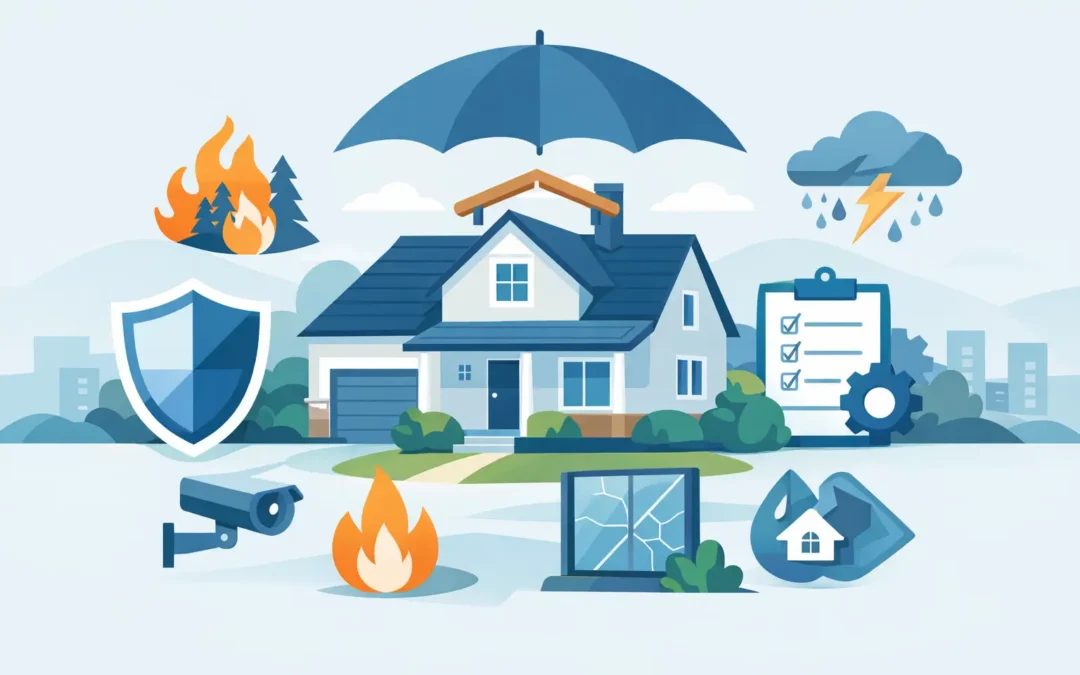
A non-renewal letter has a way of turning home maintenance into something much bigger. In wildfire country, home hardening for insurance eligibility is no longer a nice extra. For many homeowners in Central and Northern California, it is part of keeping coverage available, keeping premiums more manageable, and keeping a property insurable when carriers are pulling back.
The hard part is that many people hear “harden your home” and think it means a full renovation. Usually, it does not. What insurers and inspectors often want to see is a property that is meaningfully less likely to ignite from embers, radiant heat, and nearby vegetation. That means certain upgrades carry more weight than others, and presentation matters almost as much as the work itself.
What home hardening for insurance eligibility really means
In practical terms, home hardening means reducing the chances that a wildfire can catch your home through its weakest points. In California foothill and mountain communities, that often starts with the roof, vents, windows, siding, decks, fences, and the immediate area around the home.
Insurance companies do not all use the same checklist, and that is where homeowners get frustrated. One carrier may focus heavily on defensible space and roof age. Another may pay close attention to ember-resistant vents, enclosed eaves, and whether there is combustible material under a deck. Some rely on aerial imagery, while others use in-person inspections or third-party wildfire models.
That is why home hardening for insurance eligibility is not just about making improvements. It is about making the right improvements for the insurers still writing in your area and being ready to show clear evidence of them.
Why carriers care about specific upgrades
Wildfires do not usually ignite a house because of a giant wall of flame hitting it head-on. More often, the first problem is wind-driven embers landing in vulnerable spots. A roof valley full of debris, an attic vent without ember protection, dry leaves in gutters, or a wood fence that carries fire straight to the structure can all become ignition points.
From an insurer’s perspective, this is a claims issue. Homes with fewer ignition vulnerabilities are less likely to suffer total losses, especially in severe fire weather. That does not mean upgrades guarantee acceptance, and it does not mean every insurer will reward them equally. But in tighter California markets, a hardened home can improve eligibility, expand the list of carriers willing to quote, or help prevent a borderline property from being declined.
The strongest results usually come when the house and the surrounding property are both addressed. A newer Class A roof helps, but if heavy brush sits close to the home and overhangs the structure, the overall risk can still look too high.
The upgrades that tend to matter most
If you are trying to prioritize, start with the items that directly affect ignition risk and show well on inspections.
A Class A fire-rated roof is often near the top of the list. If your roof is older, visibly worn, wood shake, or nearing the end of its life, it can become a major obstacle for coverage. Even with a compliant material, maintenance matters. Missing shingles, exposed underlayment, and debris buildup can work against you.
Vents are another common issue. Ember-resistant attic and foundation vents can reduce the chance of embers entering the home. Open or outdated vent designs may attract closer scrutiny, especially in high-risk zones.
Windows and glazing can matter as well, particularly if the home has large exposures facing vegetation or slope. Dual-pane tempered glass often performs better under heat stress than older single-pane windows. Not every insurer requires window upgrades, but they can strengthen the overall risk profile.
Decks, fences, and attachments deserve attention because fire can travel through them to the home. If a wood fence connects directly to the house, that connection can become a weak point. Under-deck areas filled with leaves, stored firewood, or combustible furniture can create the same problem.
Then there is defensible space. This is often where homeowners can make meaningful progress without taking on a major construction project. Clearing dead vegetation, spacing trees, trimming limbs away from roofs, reducing ladder fuels, and creating cleaner zones near the structure can all affect how the property is viewed. It is also one of the first things visible in inspection reports and aerial imagery.
Defensible space and hardening work together
Some homeowners treat home upgrades and vegetation management as separate projects. For insurance purposes, they are connected.
A house with excellent vents and roofing can still be hard to place if vegetation is too dense near the structure. On the other hand, a clean, well-maintained parcel may still draw concern if the home has older combustible features that are known wildfire vulnerabilities. The best outcome usually comes from combining both approaches.
In California, defensible space expectations can also vary by terrain, access, and parcel size. A steep property surrounded by unmanaged vegetation may need more aggressive clearing than a flatter lot in a more open area. That is one reason broad internet advice often falls short. What helps one homeowner in town may not be enough for a ridge-top property in a canyon corridor.
How to approach home hardening without overspending
The wrong way to do this is to spend tens of thousands of dollars without knowing what problem you are trying to solve. The better approach is to identify what is most likely blocking or limiting your insurance options.
If you have already been non-renewed or declined, look closely at any inspection notes, underwriting comments, or photos if they are available. Those details can point to the issues carriers are noticing. If you are buying a home, ask early questions about roof age, vegetation, and prior insurance history before you close. Insurance surprises are harder to fix when you are already on the clock.
It also helps to separate upgrades into three categories: items that are likely essential for eligibility, items that may improve marketability to more carriers, and items that are good long-term resilience investments but may not change your insurance options right away.
For example, replacing a deteriorated roof may be essential. Cleaning up a heavy brush line near the home may be essential too. Upgrading every window at once may be helpful, but it may not be the first move if roof condition and defensible space are the real barriers.
Documentation matters more than many homeowners expect
Even when the work is done, you may not get full credit for it unless it is documented clearly. Carriers and brokers often need photos, invoices, contractor details, or inspection records to present a property in the strongest light.
Take before-and-after photos of vegetation clearing, roof replacement, vent upgrades, and deck or fence modifications. Keep receipts and contractor proposals. If a local fire agency or inspection program has reviewed the property, save that paperwork too. The goal is simple: make it easy for an underwriter to see what changed and why the home is a better risk now.
This is especially important when a property has old imagery attached to it. Aerial maps and prior inspection reports do not always reflect recent work. Without updated documentation, a home may still be judged based on conditions that no longer exist.
Insurance eligibility is not the same as ideal coverage
This is where homeowners need a straight answer. Hardening your home may improve eligibility, but it does not automatically mean you will get the lowest premium or the broadest policy available.
In some high-risk areas, even well-hardened homes may still face limited options. That is because insurers are evaluating regional wildfire exposure, evacuation concerns, road access, fire suppression resources, and concentration of risk, not just the house itself. A good property can still sit in a difficult market.
That said, hardening usually puts you in a better position than doing nothing. It can open doors to more realistic quotes, reduce underwriting objections, and give your broker a stronger case when approaching carriers. For many homeowners, that difference matters.
At Foothill Fire Insurance, we see this often with homeowners who assume they have no path forward after a non-renewal. Sometimes the issue is broader market withdrawal. Sometimes it is a specific property condition that can be fixed. Knowing which one you are dealing with can save money and a lot of wasted effort.
What to do next if you are trying to qualify
Start by looking at the home the way an insurer will. Focus on ignition points, roof condition, attached combustibles, and the first zone around the structure. If the property has obvious vulnerabilities, address those first. If the situation is less clear, get guidance before making major improvements.
The best insurance decisions in wildfire country are rarely made from a generic checklist alone. They come from pairing practical home hardening with a realistic understanding of which carriers are still writing, what those carriers care about, and where a property may still face limitations.
If you are feeling pressure from a renewal deadline or a home purchase, do not wait for the problem to sort itself out. A clear plan, the right documentation, and targeted upgrades can make a real difference. In these markets, preparation is not just about fire safety. It is about protecting your ability to insure the home you worked hard to own.