
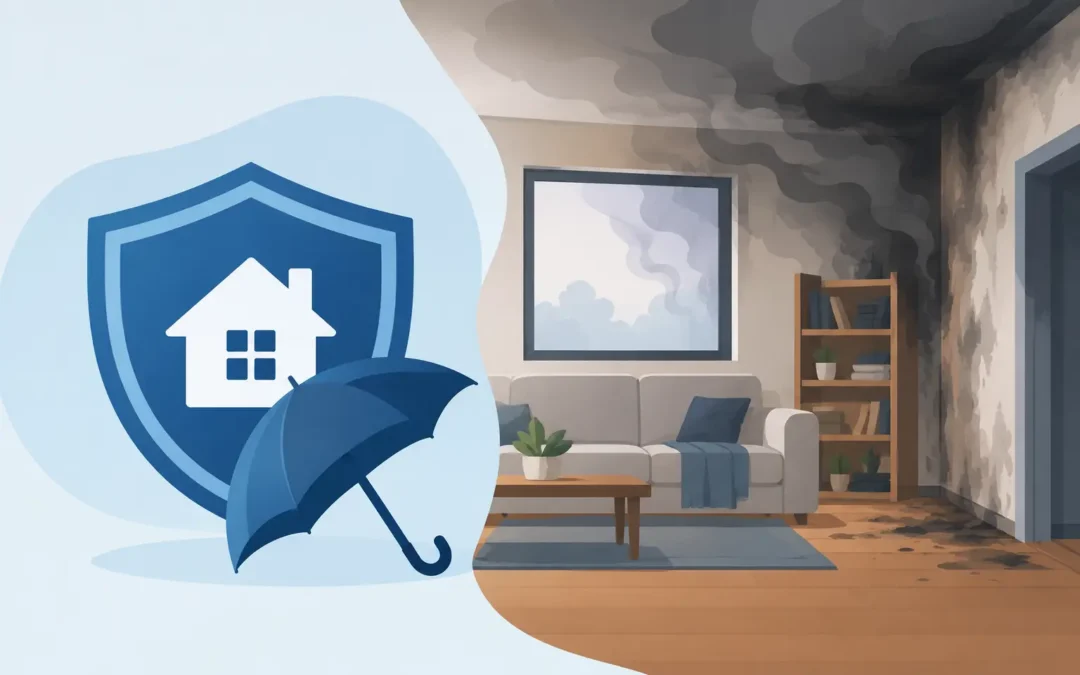
A wildfire does not have to reach your front door to leave behind a serious insurance problem. Smoke can enter through vents, settle in insulation and HVAC systems, stain walls, contaminate belongings, and leave a persistent odor that makes a home difficult to live in. For homeowners in Central and Northern California, the question is urgent: does insurance cover smoke damage?
Often, it can. But coverage depends on the cause of the smoke, the type of policy you carry, the wording of your coverage, and whether the damage can be documented. A policy that looks adequate at renewal may still leave gaps when a nearby fire fills your home with soot and ash.
Does Insurance Cover Smoke Damage From Wildfires?
Most standard homeowners policies cover sudden and accidental smoke damage when it results from a covered event, including a wildfire, a structure fire, or a fire at a neighboring property. If smoke from a nearby wildfire infiltrates your house and causes physical damage, your policy may pay to clean, repair, or replace affected portions of the property, subject to your deductible and policy limits.
That can include soot removal from walls and ceilings, professional cleaning of furniture and clothing, odor treatment, cleaning or replacement of damaged ducts, and repairs to surfaces that cannot be restored. Coverage may also apply to personal belongings, though the amount available depends on the personal property limits in your policy.
The key phrase is physical damage. Insurers generally want evidence that smoke, soot, ash, or odor caused a measurable change to the home or its contents. A light smell that can be addressed with normal housekeeping may not result in a payable claim. Heavy residue, embedded odor, damaged electronics, contaminated insulation, or professional testing that identifies smoke-related contamination creates a much stronger claim.
The Cause of the Smoke Matters
Not all smoke losses are treated the same way. Smoke from a wildfire is usually evaluated differently from smoke that builds up gradually because of a fireplace, wood stove, cooking, cigarettes, or poor maintenance.
A standard policy is designed for sudden accidental events. If your chimney has been leaking smoke into the home for months, an insurer may view the issue as maintenance-related rather than a covered loss. The same concern can arise when a malfunctioning appliance produces a long-term odor or buildup that was not addressed promptly.
Smoke caused by a nearby wildfire may be more straightforward, particularly when there are evacuation notices, visible ash, local air-quality alerts, and a clear date of loss. Still, a wildfire nearby does not automatically mean every cleaning expense will be paid. The carrier will look at the actual condition of the home, the scope of damage, and the terms of the policy.
What Parts of a Homeowners Policy May Help?
Smoke damage claims can involve more than one part of a homeowners policy. Understanding these categories helps homeowners avoid overlooking expenses after a fire event.
Dwelling coverage
Dwelling coverage protects the structure of the home. This is the portion that may respond to smoke-stained walls, damaged flooring, insulation, built-in cabinetry, roofing components, HVAC systems, and other attached parts of the house.
The dwelling limit should reflect the cost to rebuild the home, not its market value. In foothill and mountain communities, rebuilding can cost more than expected because of terrain, limited contractor availability, access challenges, code requirements, and demand after a major wildfire. Smoke damage may be a smaller claim than a total loss, but an underinsured dwelling limit is still a warning sign that the policy may not be built for the property’s real risk.
Personal property coverage
Personal property coverage can help with damaged belongings, including furniture, rugs, clothing, electronics, window coverings, and stored items. Smoke can affect possessions that look fine at first but retain odor or residue after cleaning.
Review whether your policy pays replacement cost or actual cash value for belongings. Replacement cost coverage generally pays what it costs to replace an item, while actual cash value subtracts depreciation. That difference can be significant for furniture, appliances, and older electronics.
Loss of use coverage
If smoke damage makes your home unfit to live in while cleaning or repairs are completed, loss of use coverage may help pay for additional living expenses. Depending on the policy, this may include the added cost of temporary housing, meals, transportation, and other necessary expenses above your normal household costs.
This coverage is especially valuable after a wildfire, when local lodging can be scarce and expensive. Keep every receipt and ask the adjuster before committing to a long-term rental or major expense. The carrier may have specific documentation requirements and limits.
California FAIR Plan Coverage and Smoke Damage
Many homeowners in high-risk California areas rely on the California FAIR Plan because standard insurance has become harder to obtain. The FAIR Plan can be an essential source of fire coverage, but it is not a full homeowners policy.
Because FAIR Plan policies and endorsements can vary, homeowners should not assume their coverage matches a traditional homeowners policy. Fire and smoke-related protection may be available under the policy, but important areas such as liability, water damage, theft, loss of use, and broader personal property protection may require a separate companion policy, often called a Difference in Conditions policy.
This matters after a wildfire. A homeowner may have coverage for damage to the structure but discover that temporary living costs or other related expenses are limited or excluded without the right supplemental coverage. Reviewing how the FAIR Plan and companion policy work together before a loss is far easier than trying to solve gaps while your home is being cleaned.
Common Reasons Smoke Damage Claims Are Reduced or Denied
A denied or reduced claim is not always proof that an insurer acted improperly. Sometimes the policy simply excludes the situation or the homeowner cannot show the extent of damage. Still, knowing the common trouble spots can help you protect your claim.
Claims may be limited when damage is gradual, tied to deferred maintenance, or caused by an excluded source. The insurer may also question costs that appear preventative rather than necessary to repair existing damage. For example, replacing a working HVAC system may require clear support from a qualified restoration professional showing contamination or damage.
Your deductible also matters. If the total covered cleanup cost is less than your deductible, filing a claim may not result in a payment. In California, some policies also have separate wind, wildfire, or percentage deductibles. Read the declarations page rather than assuming the deductible is the same for every type of loss.
A claim can also become more difficult when cleanup happens before the damage is documented. Homeowners understandably want to remove ash and odor immediately, but throwing away damaged property or repainting before photographs and inspection can make it harder to show what the fire caused.
What to Do After Smoke Enters Your Home
Your first priority is safety. Follow evacuation orders and do not reenter a property until local authorities say it is safe. Once you can safely assess the home, document the condition before extensive cleaning begins.
Take clear photos and video of ash deposits, soot, smoke staining, damaged belongings, air filters, vents, and every room affected. Create an inventory of damaged items, including approximate age and replacement cost where possible. Save evacuation notices, local fire information, hotel receipts, cleaning estimates, and communications with restoration companies.
Notify your insurer promptly and ask for a claim number. If the situation is significant, request guidance on emergency mitigation work. Professional smoke and fire restoration companies can help identify contamination that is not visible to the eye, but obtain estimates and keep detailed records of all work performed.
Avoid signing broad repair contracts before you understand what the policy will cover. You have the right to ask questions, request a detailed explanation of an estimate, and provide additional documentation if the initial scope misses damage.
Review Your Coverage Before Fire Season
The best time to learn whether insurance covers smoke damage is before the air turns orange and evacuation alerts begin. Review your dwelling limit, deductible, personal property coverage, loss of use limit, and any exclusions or endorsements related to wildfire and smoke.
For homeowners using the FAIR Plan, review the policy alongside any companion coverage to see where one policy stops and the other begins. A local broker who works with high-risk California properties can compare available options and help identify gaps that may not be obvious from a declarations page.
Smoke can travel miles from a fire line, and the financial effects can linger long after the flames are out. A careful coverage review now gives you a clearer path forward if your home is ever in its path.